Senior Show – Frozen
Senior pupils triumphed on stage with a four-night, near sold-out run of Disney’s Frozen. Bringing the beloved story to life, ...
| Summer Hutchie Holiday Club |
Join the Hutchie Holiday Club this summer! Open to all children aged 4-16 from any school, our fun-filled programme runs from Monday 29th June – Wednesday 11th August. View the full programme here.
|
close |


Remembering William Clarkson
William was born in 1923, and when he was 11 years old, his widowed mother enrolled him in Hutchesons’. He was an accomplished sportsman — he kept wicket for the cricket 1st XI, was a three-quarter back in the rugby 1st XV, and was runner-up in the school athletic championship. Off the field, he was president of the debating society and was school captain in 1941.
As soon as he left school, William volunteered to join the RAF. He was sent to Rhodesia to train as aircrew. His potential was recognised during training — not only did he qualify as a pilot, but he won the shield for the best cadet in his group and was commissioned as an officer. Following further training in marine reconnaissance, William joined RAF No. 454 Squadron, which was based in Alexandria, Egypt.
On 8 November 1943, William’s crew, flying a Baltimore bomber aircraft, took off on a normal reconnaissance flight. At 0930, he reported having encountered enemy aircraft, but at 1050, another crew reported seeing a dinghy in the water, with an enemy vessel sailing toward it. However, they could not say whether there was anybody in the dinghy. William’s aircraft never returned to base, and the crew were reported missing. William was 20 years old.
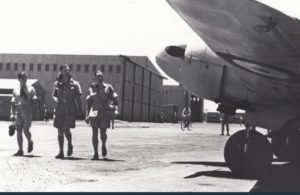
Stanley Cuthbert Strang and the SS Corinaldo
Stanley was born on 28 April 1924 in Glasgow. His parents were Hugh Lancelot Pollock Strang and Emily Strang, and the family lived in Newton Mearns. On leaving school, Stanley decided to join the merchant navy, and he joined the Glasgow-based Donaldson Line as an apprentice.
He gained practical experience at sea while studying to pass the various examinations which would qualify him to become a deck officer, and ultimately a ship’s captain. In 1942, Stanley was a cadet on the SS Corinaldo, which was engaged in carrying vital food supplies to the British Isles.
During October 1942, Corinaldo was in a convoy bound for the UK from Sierra Leone. While passing the Canary Isles, Corinaldo was torpedoed and sunk. Some of the crew, including Stanley, made it into lifeboats. Over the next week, Stanley’s boat became waterlogged and unmanageable, and there was no food or water for the six men on board. Eight days after the sinking, they sighted land, and two of them, one of whom was Stanley, volunteered to swim ashore for help. Only Stanley managed to reach the shore, and he was able to raise the alarm. However, dehydrated and exhausted, he died shortly afterwards.
For his bravery, Stanley was awarded the King’s Commendation for Brave Conduct and the Lloyd’s War Medal for Bravery at Sea. Stanley was 18 years old.
Brigadier John Brown and D-Day
John Brown was born in Glasgow in 1923 and educated at Hutchesons’ School. He joined the army at 16 and trained as a Royal Engineers sapper. During World War II, he prepared for and took part in the D-Day landings in June 1944, landing on Juno Beach under heavy enemy fire. He was one of the first men on the beach. His unit cleared mines and built trackways to allow Canadian forces to advance, though they suffered heavy casualties. He later advanced through France into Germany and took part in Operation Plunder (March 1945). During this operation, he rescued a fellow soldier under fire, earning the Military Medal for bravery.
After the war, John worked for Bassetts confectionery, eventually becoming general manager for Scotland and Northern Ireland. Alongside his civilian career, he continued military service in the Territorial Army, rising to colonel by 1967. He later became commandant of the Scottish Cadet Force, was promoted to Brigadier, and was awarded an OBE for his contributions. He was also active in veteran welfare through the British Legion and served as a Deputy Lord Lieutenant for Renfrewshire.
John Brown had a distinguished life marked by wartime bravery, leadership in military and civilian roles, and a strong commitment to supporting veterans and youth.
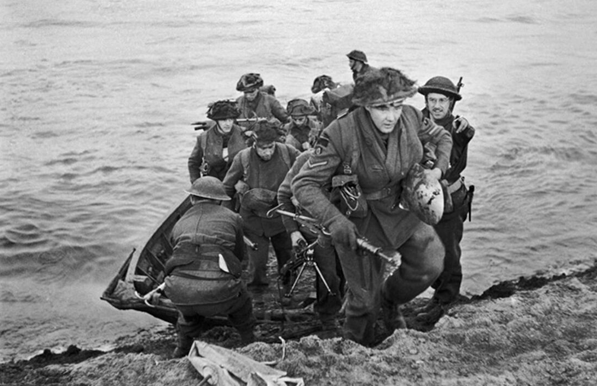
Today, we pay our respects to all those who served in WWII, whose sacrifice and bravery shall be honoured and remembered.
Lest We Forget.
Committed to the collection, preservation and maintenance of the records of the school, its activities and pupils, the School strives to record the school’s history and memory and hold a range of archive material from class registers and magazines to photographs, trophies and uniforms. Pupils are encouraged at both Primary and Secondary School to engage with archive material, with the aim to provide a dynamic educational resource for the school and wider community.
Would you like to know more about the School’s History? Contact our School Archivist, Ms Devenney at archives@hutchesons.org with any enquiries.
Senior pupils triumphed on stage with a four-night, near sold-out run of Disney’s Frozen. Bringing the beloved story to life, ...
Each year, our Primary 6 pupils take part in cycle training as they prepare for their annual trip to Millport. ...
The Duke of Edinburgh’s Award continues to be a valued part of life at Hutchesons’, with both current pupils and ...